
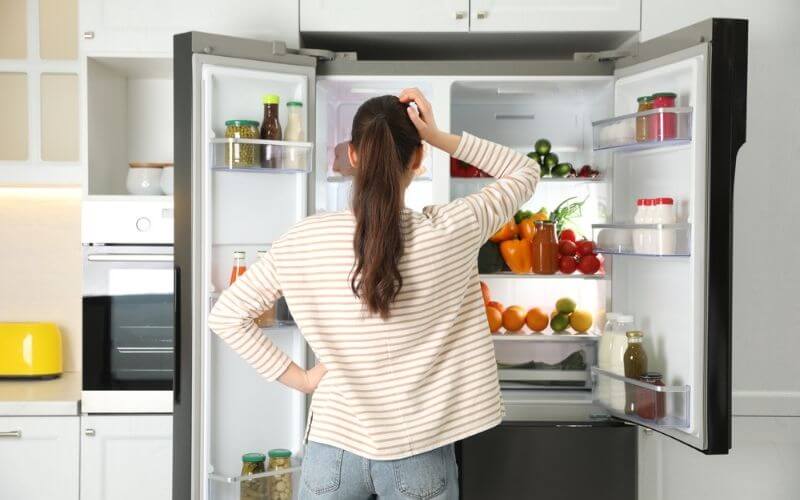
If your fridge temperature keeps changing, it’s more than an annoyance—it’s a risk to your food’s safety. The ideal fridge temperature should be 40°F (4°C) or lower to prevent bacterial growth and food spoilage 🦠. Multiple factors like frequent door opening and seasonal changes can affect it, but the good news is, they can be managed 🔄.
What is the Ideal Normal Fridge Temperature?
Most people ask, what temp should my fridge be? According to the FDA, you should keep your fridge at a Proper refrigerator temperature of 40F/4C or under. This temperature stops small bugs from growing and keeps eggs and fresh produce from going bad.
At the same time, it keeps condiments and items like jam, cream cheese, and butter at the right feel. Veggies and fresh produce will freeze if the fridge is colder than 40 degrees Fahrenheit. This changes how they feel and makes them hard to use.
If the fridge is too warm, your food can spoil easily. Eating spoiled food can make you sick.
In short, the Optimal temp for a fridge and walk-in freezer is between 0 and 4C.
| Condition | Temperature | Consequences |
|---|---|---|
| Too Cold ❄️ | Below 40°F/4°C | Freezes veggies and changes their texture. |
| Optimal 🟢 | 40°F/4°C | Prevents bacterial growth and spoilage. |
| Too Warm 🔥 | Above 40°F/4°C | Food spoils easily. |
Why Does My Fridge Temperature Keep Changing?
A fluctuating fridge temperature is both annoying and risky. The constant rise and fall in temperature can result in bacterial growth and spoil your food quickly.
Temperature fluctuations can also alter condiments and processed foods’ texture, flavor, and quality.
Moreover, putting in a cold beer or brewed tea for a chilled drink can be frustrating, only to find that the temperature shift stopped the drinks from cooling. If you have a refrigerator turning on and off a lot, call customer service to find out what to do.
Here are a few reasons why your refrigerator may have Temperature fluctuations:
| Cause | Impact | Solution |
|---|---|---|
| Frequent Door Opening 🚪 | Affects steady temperature. | Open only when necessary. |
| Altered Thermostat Setting 🌡️ | Changes in cooling. | Check and reset the thermostat. |
| Faulty Cooling System 🛠️ | Fridge temperature can reach 50°F overnight. | Call a technician. |
| Electrical Issues ⚡ | Voltage spikes affect temperature. | Check electrical setup. |
| Blocked Thermostat Sensors 🍲 | It makes the fridge too cold or too warm. | Don’t place food near the thermostat. |
| Blocked Vents 🌬️ | Warm air builds up, heating the fridge. | Ensure proper ventilation. |
| Dirty Compressor Coils 🌀 | Causes wild temperature fluctuations. | Clean the coils. |
You Keep Opening the Fridge Door🚪
If the fridge door is opened and closed repeatedly or is kept open for a long time, the fridge will be unable to maintain a steady and constant temperature. It can also result in a fridge overcompensating by generating more cold air, so there is a sharp drop in temperature.
To test this idea, open your fridge door only when necessary. If the issue was frequent opening and closing, the temperature should stabilize in a day or two.
The Thermostat Setting was Altered🌡️
Maybe it’s not your fridge. Maybe a housemate or family member changed the fridge’s temperature setting. For people saying: ‘My fridge is not cooling,’ or if you have a refrigerator not staying cold, check the thermostat.
If the temperature is different, determine who is changing it and why. If you want to find out how to make the fridge colder with a dial, this video may help. But if your refrigerator has a bad temperature sensor, you may need to contact the manufacturer for a replacement.
Samsung Fridge Keeps Changing Temperature on its Own 🛠️
If you find that your fridge at 50 degrees overnight without you changing any settings, a faulty cooling system could be to blame. In such cases, it’s vital to call for a technician to diagnose the issue.
Cooling System: How it Affects Temperature
The Cooling system plays a vital role in maintaining a steady temperature. If it’s not functioning properly, you’ll experience fluctuations that can impact food safety.
Electrical Factors in Temperature Change⚡
Electrical issues can also cause inconsistent temperatures in your refrigerator. For instance, voltage spikes can affect how well the fridge maintains its temperature.
The Thermostat Sensors are Blocked
Blocked thermostat sensors can result in a refrigerator getting too cold or too warm. If food containers, jars, and bottles are too close to the fridge’s thermostat, they can make it less functional.
Placing warm food containers by the thermostat will make the fridge too cold. But if cold food is placed too close to the sensor, the thermostat will warm the fridge instead.
To fix this issue, don’t place food near the thermostat or by the back of the fridge. Then, check to see if the temperature stabilizes.
The Vents are Blocked
If you’re stuck with a refrigerator temperature at 50 degrees, and nothing is wrong with the thermostat, maybe you’re dealing with blocked vents. Warm air is released through the vents during the cooling process. If this air can’t escape, it’ll build up and heat the fridge instead.
To prevent this from happening, ensure your fridge has a few inches of ‘breathing room’ on all sides so that it gets proper ventilation.
The Compressor Coils are Dirty
To create cool air, your fridge needs a refrigerant system to transfer heat from inside. A constant cycle of gas compression and evaporation makes your fridge function. The heat from the cycle is pushed out through compressor coils.
These coils are the wrapped metal tubes at the back bottom of your fridge. Dirty and dusty compressor coils will make your fridge’s temperature oscillate wildly. Here’s how to get them clean.
The Problem with a Refrigerator Temperature at 50 Degrees

Keeping your refrigerator at the right temperature is crucial for food safety. When your fridge is consistently at 50 degrees, you put yourself at Risk of foodborne illness.
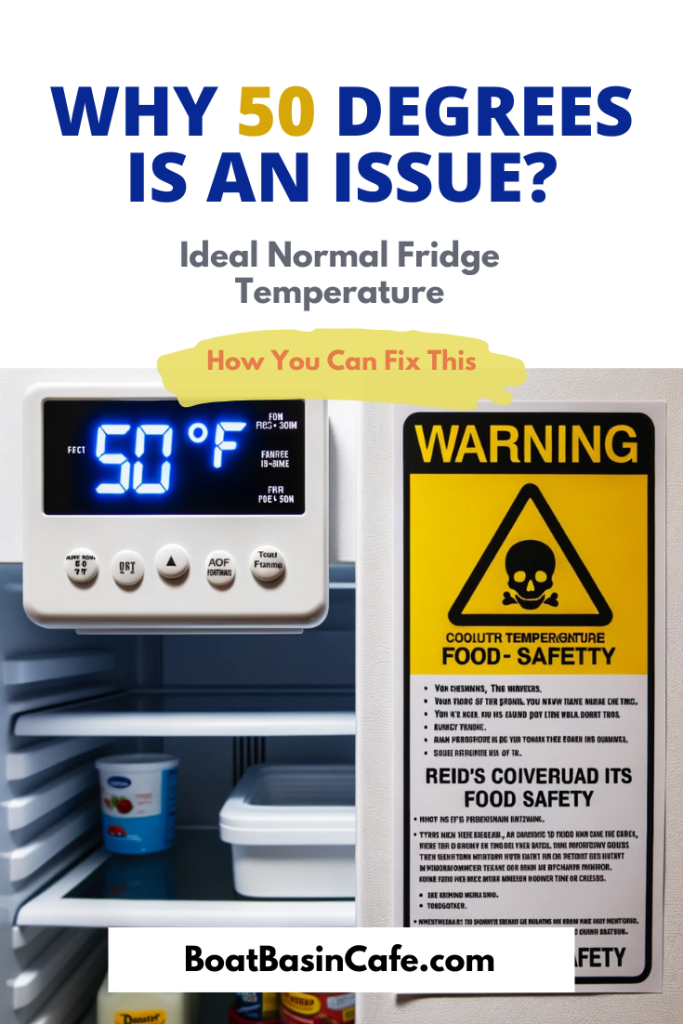
Why 50 Degrees is an Issue?
50 degrees is not a safe temperature for food storage. At this temperature, bacteria can grow quickly, leading to Foodborne illness.
How to Resolve the 50 Degree Issue?
To fix the issue, first check the thermostat setting. If the temperature is correct, but the fridge is still at 50 degrees, you might need to call a technician.
Why is My Fridge at 50 Degrees?
Several factors could cause your fridge to be at 50 degrees, including faulty wiring or thermostat issues. Addressing these problems promptly can help to avoid risk of foodborne illness.
Will Food Spoil at 50 Degrees in Refrigerator?
Yes, food can spoil at this temperature. In a fridge at 50 degrees, bacteria grow faster, increasing the risk of Foodborne illness.
Therefore, it’s important to ask: Will food spoil at 50 degrees in refrigerator? The answer is yes, it likely will.
How to Reset Temperature on Frigidaire Refrigerator
To change the temperature in your Frigidaire appliance, press the “∧” or “∨” button. This will adjust the temperature to your desired setting. After pressing, the temperature indicators will start to blink.
The display will beep if no more changes are made within 5 seconds. Then, the new temperature setting will take effect.
To factory reset the appliance, look for a ‘default settings’ button on the display panel. Press this button to return all settings to default. All your fridge’s customized settings will return to the default settings.
How to Adjust Refrigerator Temperature Control
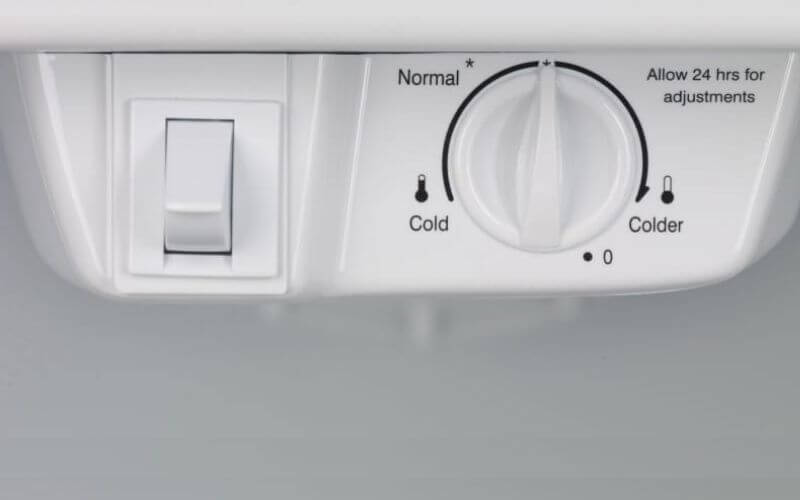
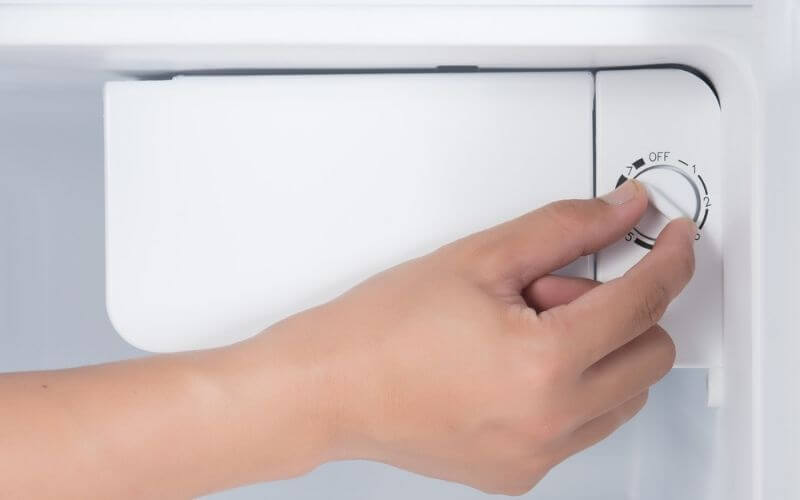
- Make sure you find the dial inside the refrigerator. The dial is usually at the top, near the back, and close to the light bulb. Look for numbers or notches on the dial that show the temperature settings.
- To cool the refrigerator, turn the dial-up. To make it warmer, turn it down. A higher number on the dial means the fridge will be colder.
- Consider adjusting the setting until the temperature is between 3 to 0 °C. Put a thermometer in a glass of water on the center shelf. Wait 6 hours, then check the temperature. If needed, adjust the dial again.
- You might need to repeat these steps to find the ideal temperature. After each adjustment, let the fridge rest for 6 hours.
You may also like: How to defrost a mini fridge freezer
Common Misconceptions About Fridge Temperatures
📚 Myth vs Fact Table
| Myth | Fact | Example |
|---|---|---|
| Lower Temperature is Always Better ❄️ | Too low a temperature can freeze and ruin certain foods. | Fruits and vegetables can get spoiled. |
| All Foods Require the Same Temperature 🍲 | Different foods have different optimal storage temperatures. | Tropical fruits prefer 55 to 85°F. |
Myth 1: Lower Temperature is Always Better
A common belief is that setting your fridge to the lowest temperature will make your food last longer. While it’s true that a colder environment slows down bacterial growth, setting the temperature too low can also freeze and ruin certain foods like fruits and vegetables.
Myth 2: All Foods Require the Same Temperature
Many people think a single temperature setting in a refrigerator suits all types of food. In reality, different foods have different optimal storage temperatures. For example, some tropical fruits and vegetables are best stored at temperatures ranging from 55 to 85 degrees F, while certain meats require colder settings of 85 to 115 degrees F. Some fermented foods even require temperatures as specific as 115 to 125 degrees F.
Importance of the Temperature Danger Zone
Why You Should Be Concerned
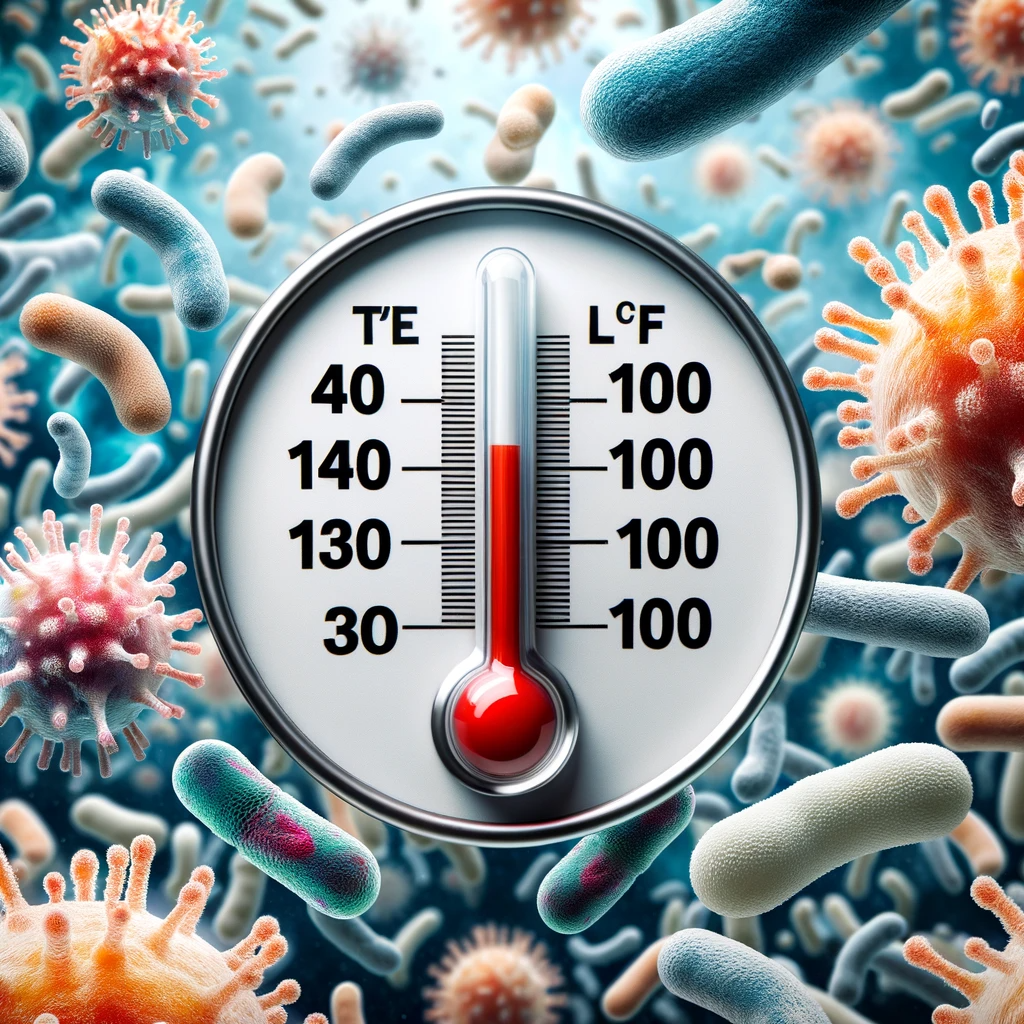
Understanding the Temperature danger zone is important for food safety. This range is usually between 40 and 140 degrees Fahrenheit. When food is in this zone, it is more susceptible to Potentially harmful bacteria growth. This can lead to foodborne illnesses that could be serious or even fatal.
How to Avoid Risks
It is essential to store foods below or above the Temperature danger zone to minimize the risk of bacterial growth. Use a calibrated food thermometer to ensure your fridge and freezer are set at the correct temperatures. Always keep hot and cold foods cold, and don’t leave food at room temperature for extended periods.
Energy Efficiency Implications of Fridge Temperatures
Proper temperature settings can have a significant impact on your energy bills. Too cold, and the appliance works overtime, driving up costs. Too warm, and you risk food spoilage, leading to wasted money. Thus, maintaining a balanced fridge temperature is key for optimal Efficiency.
How to Maintain a Consistent Fridge Temperature
Maintaining a consistent fridge temperature involves more than just setting the dial. It requires careful Food storage, Proper handling, and an understanding of factors like Moisture content and Salt level. Attention to these elements can help keep your Cold-stored foods fresh for longer periods.
Importance of Regular Cleaning
A clean fridge is essential for maintaining a stable temperature. Over time, grime and spills can affect airflow and cooling efficiency. Regular cleaning helps ensure optimal performance.
Role of Proper Storage
Proper handling and storage of foods play a crucial role in maintaining consistent fridge temperatures. Foods with high Moisture content should be stored separately from dry items to avoid condensation, which can affect temperature stability.
Food Storage Guidelines
Correct Food storage is key for a well-functioning fridge. Store meats on the lowest shelf to avoid cross-contamination. Vegetables should go in crisper drawers where the Moisture content can be controlled. Foods with high Salt level like pickles or olives, can be kept in the door, where temperatures are less consistent. Keeping these guidelines in mind will help in the optimal storage of Cold-stored foods.
The Impact of Seasonal Changes on Fridge Temperature
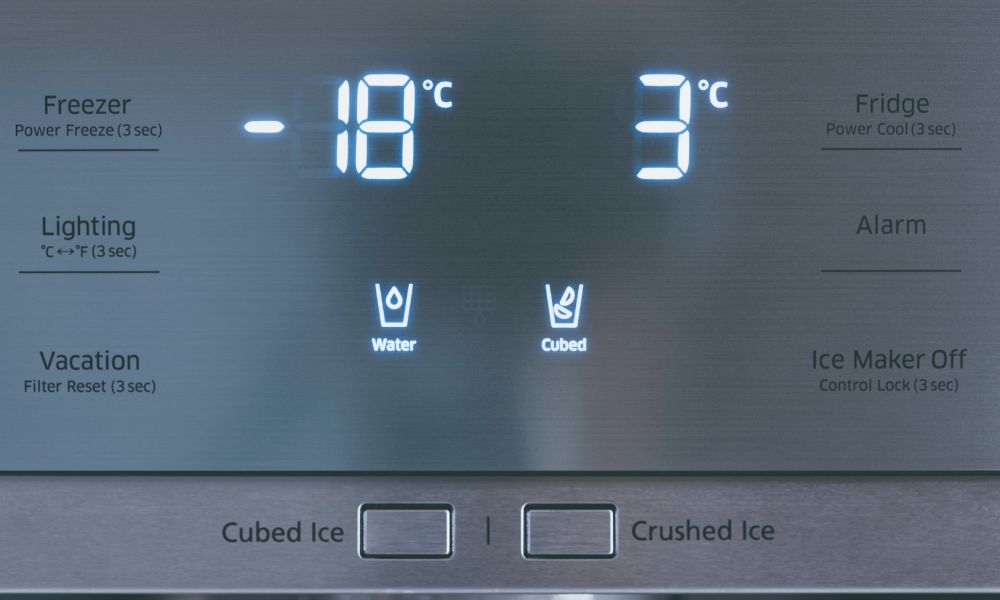
Seasonal changes can have a noticeable effect on your fridge and freezer temperatures. Adjusting your settings to maintain food safety and efficiency during these periods is essential.
| Season | External Factors | Risks | What To Do |
|---|---|---|---|
| Summer ☀️ | Room temperature above 55°F | Power outage due to overload, quick thawing of frozen food. | Ensure ideal freezer temperature. |
| Winter ❄️ | Cooler room temperatures, winter storms | Power outage, frozen food at risk. | Maintain ideal freezer temperature. |
Summer Months
In the summer, the external Room temperature can often exceed 55 degrees Fahrenheit, making your fridge work harder to maintain a cool interior. This increased workload can risk a power outage due to overload and cause frozen food to thaw quicker if your freezer is not at the ideal freezer temperature.
Winter Months
During winter, the cooler room temperatures might make it seem like your fridge doesn’t have to work as hard. However, don’t forget that a power outage is also possible due to winter storms, putting your frozen food at risk. Ensure that your fridge and freezer are at their ideal freezer temperature to ensure food safety.
Freezer Management in Different Seasons
Managing your freezer effectively is vital year-round. Whether it’s summer’s heat or winter’s chill, ensure that you are keeping your freezer at the ideal freezer temperature. This not only keeps frozen food safe but also helps in energy efficiency.
Frigidaire Refrigerator Temperature Setting
If you just got a Frigidaire fridge, setting the temperature for the first time can be confusing. Use the manual to set the fridge to its recommended setting and then let it stabilize for 24 hours before measuring the temperature.
Frigidaire fridges have temperature controls that can be adjusted with a dial, slider, or electronic pad. Adjust the dial or slider or press the button on the electronic pad to increase or decrease the temperature.
👩🍳 Read More: Refrigerator Maintenance Tips
FAQs
Below, you’ll find answers to questions we get asked the most about my fridge temperature changing.
01. What is the Best Refrigerator Temperature?
The optimum temperature for a fridge is between 0C and 4C or 40F and 32F.
02. How to Test a Refrigerator Thermostat?
Put a glass of water with a thermometer in it in the middle rack of the fridge. Wait 5-6 hours before measuring to see what temperature the thermostat is set to.
03. What Would Make a Refrigerator Stop Getting Cold?
Food blocking the thermostat sensor, a dirty compressor coil, or even opening and closing the fridge door too often.
04. How to Check Fridge Temperature without the Thermometer?
You can put a glass or bottle of water in the fridge to estimate the temperature. After 5-6 hours, take it out of the fridge and look at the water container.
Keep an eye out for condensation; the faster it appears on the surface, the colder the temperature.
05. Why is My Fridge Not Cold?
Ensure no food is at the back of the fridge, blocking any sensors. Also, blocked vents and coils can cause fridges to heat up.
06. How Do I Find the GE Profile Refrigerator Troubleshooting Temperature?
If your fridge isn’t cooling properly, ensure the thermostat and sensors are working properly, and the temperature is set to the correct number. If this doesn’t work, contact customer service.
07. What Should the Internal Temperature of My Fridge Be?
The internal temperature of your fridge should ideally be between 0C and 4C or 40F and 32F. Anything outside this range could lead to food spoilage.
08. What Is the Hot Holding Temperature for Foods in My Fridge?
While your fridge is not designed for hot holding, if you are storing cooked foods, the hot holding temperature should not exceed 140 degrees Fahrenheit to minimize bacterial growth.
09. Why Does My Fridge Temperature Exceed 140 Degrees Fahrenheit?
If your fridge temperature ever exceeds 140 degrees Fahrenheit, it is a sign of a serious malfunction and you should seek immediate professional help. This temperature is unsafe for food storage and could lead to foodborne illnesses.
In All
Whether your fridge or freezer temperature keeps going up and down or stops cooling your food, this issue can cause lots of undue stress. The simple troubleshooting options outlined in this article offer quick fixes to small issues that can become serious later.
The next time your cold brew is too warm for your liking, you won’t have to ask yourself: why does my fridge temperature keep changing? You’ll know just what to do.