Do you have problems with your Pit Boss grill? You don’t need to cancel the BBQ. The guide you are reading gives fast, easy steps for Pit Boss grill fixes. For a grill that won’t start or has ignition problems, this guide helps you grill again fast.
Quick Troubleshooting Guide
Pit Boss Smokers Troubleshooting: Quick Fixes

If you have a ‘Pit Boss not working’ situation, chances are it’s a minor blip that you can fix by yourself. Here is everything you need to know about Pit Boss pellet grill troubleshooting:
Grill Won’t Start:
If your Pit Boss grill is not turning on, several components could be at fault. First, verify that your power outlet is functional and that the grill is plugged in properly. Double-check the wires connecting your grill to the power outlet to ensure they are intact and secure.
If that’s not the issue, unplug your Pit Boss grill and re-plug it, making sure that the GFI circuit doesn’t trip. Unplug any other devices connected to the GFI unit to isolate the problem. If the GFI still doesn’t reset, inspect your circuit breakers and any relevant wires for issues.
Next, turn the temperature dial to the ‘Off’ setting, and then to the ‘Smoke’ setting. The grill’s LCD screen should light up if everything is working correctly. If the GFI trips, inspect the wires connected to it before contacting the manufacturer.
If the grill still doesn’t power on, remove the cooking grates and grease tray to examine the igniter and its wires. If the igniter doesn’t work when you turn the grill on, replace the 5-amp fuse located at the back of the control panel. Should the igniter continue to fail, reach out to customer service for a replacement part.
You should also inspect the auger and its connecting wires. If the auger isn’t feeding pellets into the firebox, this component may need replacing. This is a common solution for Pit Boss 820 troubleshooting. If you suspect a faulty control panel, examine its wires and, if needed, contact the manufacturer for a new part.
Lastly, insufficient power can also cause the electrical system, including wires, to malfunction, making it seem like the issue lies with the pellet grill when it doesn’t.
Grill Won’t Ignite:
For those with a Pit Boss grill not igniting issue, tread carefully. If your pellet grill stops lighting up within 18 months of purchase, contact Pit Boss to figure out what is going on.
But if your pellet grill is older, examine the igniter and follow the steps mentioned above. If you still have a Pit Boss grill not lighting, then you need to replace the igniter.
Grill Doesn’t Produce Smoke:
For a Pit Boss not smoking, you might assume that the whole smoker is broken and needs replacing. But in reality, this may be an issue with the temperature, pellets, or firepot. For starters, the ideal temperature is 60°F– 90°F (15.5°C – 32°C) with a P4 setting.
To get more smoke out of your grill, cook things at a lower temperature, at around 225°F (107°C). Make sure your wood pellets are completely dry without any clumping, as wet pellets won’t produce any smoke.
For a complete take on the P settings on your Pit Boss pellet grill, check out the table below.
| “P”Set | ON | OFF |
| P0 | 18 | 55 |
| P1 | 18 | 70 |
| P2 | 18 | 85 |
| P3 | 18 | 100 |
| P4 | 18 | 115 |
| P5 | 18 | 130 |
| P6 | 18 | 140 |
| P7 | 18 | 150 |
Source: bbqgrillacademy
In short, the higher the P or Pause setting, the lower the temperature and the higher the smoke. If you want your meat to have a smoky flavor, just increase the P setting. It will cook the meat at a low temp without drying it out.
By the way, the P setting works only in the Smoke mode.
Grill is Too Hot on Smoke Setting:
You may find the grill too hot on the smoke setting. This happens if you shut the lid before the grill has had a chance to get rid of extra fuel produced when you turned it on. Always wait for ten minutes with the lid open.
The smoke temperature after ten minutes should be between 180° to 210°F (80° to 100°C). If not, contact the manufacturer to help you out.
Another common mistake we make is to open the lid to control the cooker temperature. This is okay only when the Smoke setting is on. Otherwise, things can go haywire when there’s a reaction between the temperature controller and the outside temperature.
Pit Boss Grill Temperature Issues:
Temperatures are not high enough
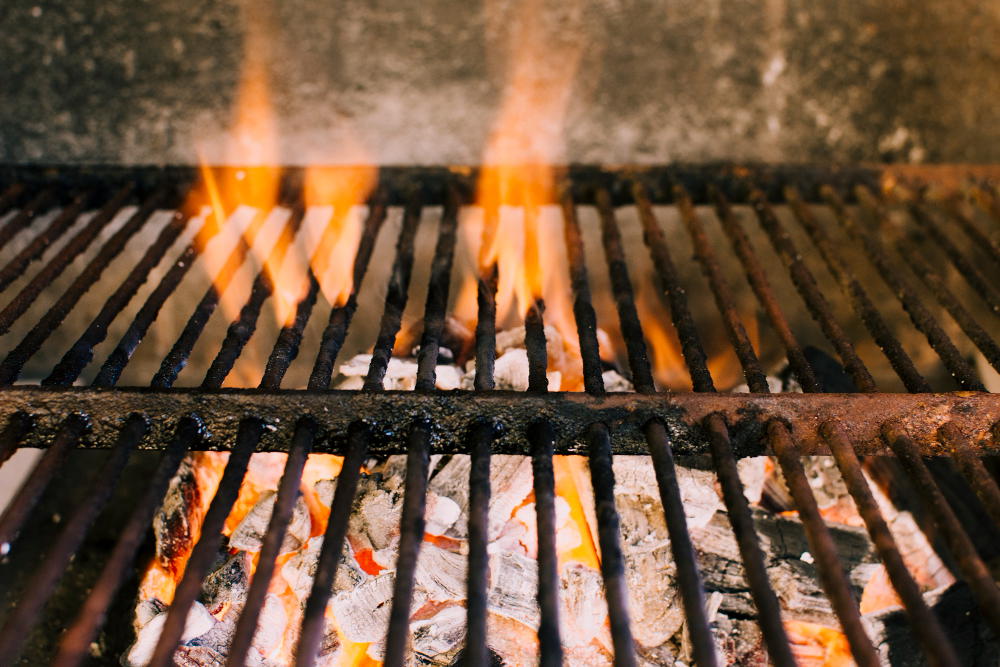
Most novices have a hard time trying to get their smoker to work at a consistent temperature. If your Pit Boss pellet grill is not getting to temp, there is a good chance that the firepot isn’t getting the oxygen it needs to reach and maintain the required temperature.
In this case, you need to check the fire pot and examine the airways, making sure there are no obstructions. You also need to look at the fan and ensure that it is working properly. If the burn pot has holes or has eroded away, it needs to be replaced.
Sometimes, the temperature isn’t high enough because you are low on pellets or you have wet pellets. Add more pellets and make sure they aren’t damp or very old.
Also, check if the smoker is clean and free from dirt. A quick wipe with a damp cloth should do.
Moreover, if you have cold weather, covering the Pit Boss pellet grill will protect it and you won’t have any issue getting the right temperature.
If the grill is too hot on the Smoke function, this means that the P level is set too low. Here is how to adjust the P setting on Pit Boss grills.
Check that the temperature dial is set to Smoke, then push the P setting button up to boost the level. This increases the time between each pellet cycle and lowers the overall ambient temperature.
Too high temps
Just like there are low-temperature issues with your Pit Boss pellet grill, you could also face overheating troubles with it.
Excess oil and grease on the cooking grates and/or the grease tray may lead to overheating. That’s why you should thoroughly clean these parts of the Pit Boss pellet grills before you put that steak or patties on.
Another reason for a very high heat could be you haven’t closed the pellet grill lid properly. Even if it’s slightly open, it could lead to flare-ups that could be dangerous.
To avoid this situation, just make sure to close the lid all the way down.
Don’t cook on high heat for a very long time. This is a potential cause for the pellet grill to be overheated and lead to a sudden flare-up. When you’re cooking greasy food, make sure to keep the temperature below or at 350°F (177°C).
Keep a timer near you so that you don’t lose track of time when cooking at high temperatures.
Temperature Fluctuations
When you notice temperature fluctuations in the pellet grill, it signals that the weather is windy or wet or too cold or too hot. It could also point to a dirty temperature probe.
So, as mentioned earlier, it’s good to cover the Pit Boss pellet grill when not in use. Also, try to avoid grilling in windy situations or in direct sunlight. Always keep the Pit Boss pellet grill in the shade during and after use.
Keeping all the parts of this smoker clean will make sure you don’t face temp fluctuations. While you’re at it, check the temperature probe wire to see if it’s functioning properly.
Combustion Fan and Temperature Control
The combustion fan plays a vital role in maintaining the grill’s temperature. This fan circulates air within the grill, aiding in the burning of pellets in the firepot. In turn, this ensures that heat is evenly distributed throughout the grill.

Common Issues with the Combustion Fan:
Fan Not Working: If the combustion fan is not working, the grill may not reach the desired temperature or may have uneven heat distribution.
Noisy Fan: A noisy combustion fan might indicate wear and tear, which could eventually lead to temperature issues.
Erratic Speeds: If the fan speed is inconsistent, it may result in temperature fluctuations during grilling.
👩🍳Troubleshooting Tips:
Check for Obstructions: Make sure nothing is blocking the combustion fan. Debris or buildup can impair its functionality.
Clean the Fan: Regular cleaning can help the fan operate more efficiently, thereby maintaining consistent temperatures.
Check Electrical Connections: Loose or damaged wires can disrupt the fan’s operation. Ensure all connections are secure.
Consult the Manual: The user manual often contains specific troubleshooting steps for the combustion fan. Following these can resolve many common issues.
Temperature Shifts from Set Temperature:
There could be a number of reasons the temperature shifts from the set temperature although it’s normal to experience a change of temperature by +/-25°F (-3.8C). That’s because the Pit Boss pellet grill functions through the auger turning on and off at set intervals.
However, check if the flame boiler has been positioned properly. It should be on top of the grease drain on the right side and on the bracket on the left side of the grill.
Plus, the angle at which it rests also has an impact on how the set temperature varies. If the flame boiler is tilted on the right side and is higher on the left side, then it’s been placed perfectly.
If you still face temperature swings, try lifting up the chimney cap as high as possible. Just remember to lower it when the outside temperature is cold as otherwise, the grill won’t have the right temperature for cooking. Lowering it by an inch is enough.
Another reason for temperature shifts could be an open flame boiler slide cover. Check to see if it’s completely closed to prevent this problem.
Lastly, we can’t stress enough about the quality and freshness of the pellets. To check the quality and that they’re totally dry, snap one. If it’s crumbly, then you have to get a fresh bag. A crisp and clean break indicates the pellets are just right.
Err Codes on Display
A Pit Boss err code is best resolved by unplugging your grill and then restarting everything from scratch. Before you reconnect it to the power socket, check out the temperature sensor and wipe it down.
An ErH means there is an issue with the heat and temperature control. If the grill is overheating, turn it off and let it rest for a couple of minutes before relighting the grill and removing some of the pellets. This code can also mean there is a grease fire in the cooking chamber.
On the other hand, an ErP means the temperature dial was still switched on when the grill was plugged in. This basic safety feature prevents the grill from accidentally lighting up.
To fix this, switch the temperature dial to the ‘Off’ setting. Wait a few minutes, then set the dial back to your chosen temperature.
Blank LCD Screen
The simplest cause for this is that your pellet grill isn’t plugged in. This happens often as people are distracted by firing up their grill that they forget to take this simple first step. Make sure your outlet works and your grill is securely plugged in first.
If the grill is plugged in but the screen is still blank, this could mean the circuit board fuse has been tripped and needs replacing. Your user’s manual will have instructions with a diagram that offers you a visual aid.
A blank screen might also mean that the GFI has been tripped. Make sure all your connections and components are dry and there is no overheating.
Meanwhile, find out the minimum amperage for your GFI service as it must be at least 15 amps to power your Pit Boss pellet grill.
Finally, examine your extension cord. For pellet grills, you should use a cord that measures 25 feet in length or shorter. A longer cord may result in a grill receiving insufficient voltage.
Auger Movement Issues
A motionless auger could be caused by an auger jam, a block resulting in a motor that doesn’t have power delivery, or even a nonfunctioning motor.
An auger jam may happen if the pellets in the auger tube absorb enough humidity to swell and re-solidify. This results in a solid lump of broken-down pellets around the auger, locking it in place. When this happens, the auger motor won’t be able to rotate the auger at all.
To check and confirm if the auger is jammed, look at the fan blade connected to the auger motor. You will either have to take off the shell of the hopper or remove the access panel of the bottom hopper and look up into the hopper to do this.
If the auger is jammed, you will notice the tiny fan attempting to spin on startup. Then, when you shut the grill off, the fan blade will unwind and spin backward a couple of times. To unblock the jammed auger, you have to take the auger out of the grill and remove the blockage.
But if the auger isn’t jammed, contact Pit Boss Customer Care so they can help you figure out what is wrong with it.
Flashing Dots and Temperatures
If you can see flashing dots on your control board screen, this simply means the igniter is on. The igniter will shut off five minutes after startup.
Once these flashing dots go away, the grill will start to adjust to the temperature selected, which is the smoke setting for barrel-style pellet grills.
Some grills have a relighting feature in which the igniter will turn on again when the grill drops below 130°F (54°C). Once the igniter comes back on, the flashing dots will reappear.
If the temperature is flashing on your grill’s control board screen, it means the temperature of the unit is under 150°F (65.5°C) on Cook mode or under 110°F (43°C) on Smoke mode. It will flash like this upon startup until the grill is hot enough. It may also flash this way if the temperature has a sudden or extreme drop, and lets you know if the fire is about to be extinguished.
When this happens, you should check the hopper and refill with pellets if needed. Or, check the fan and auger motor speed to ensure they are giving enough fuel to the pellets and that they are not blocked.
Next, clear any residual ash from the firepot and the grate.
Unusual Smoke Colors
If you notice the color of the smoke as greenish or yellow or if there’s excess smoke, it’s a sure sign that there’s too much grease on the cooking grates.
Check if the hopper is filled with dry pellets. If not, refill after removing any damp pellets. Also, take a look at the burn pot and the hopper for any blockages.
The best thing to do is to thoroughly clean the Pit Boss pellet grill after each use. Don’t forget to wipe clean the inside of the lid as well.
Pit Boss Seasoning Guide
Seasoning your Pit Boss grill is a crucial step. It ensures your food has the best flavor and your grill lasts longer. Follow the steps below for an optimal grilling experience.
Initial Seasoning
For a new grill, an initial seasoning is necessary. Turn on the grill and set the temperature to 350°F. Let it run for 30 minutes. Then, turn up the heat to 450°F for another 30 minutes. This process burns off any manufacturing oils and prepares the grill for cooking.
Daily Seasoning
Before each use, apply a thin layer of cooking oil to the grates. Heat the grill for 5-10 minutes on a medium setting. This keeps the grates non-stick and ready for grilling.
Monthly Maintenance
Clean the grates, firepot, and interior surfaces once a month. After cleaning, apply a coat of high-heat paint to prevent rust. For the grates, use a food-safe lubricant or cooking spray for seasoning.
Using Wood Pellets
Quality pellets make a difference. Opt for hardwood pellets without fillers or additives. For poultry, fruitwood like apple or cherry works well. For red meats, hickory or mesquite offers a robust flavor.
Pit Boss Spice Rubs
Pit Boss offers a range of spice rubs to elevate your grilling game. For chicken, use the ‘Hickory Bacon’ rub. For fish, the ‘Lemon Pepper Garlic’ adds a tangy twist.
By following this guide, you can extend the life of your Pit Boss grill and ensure each meal is a masterpiece. Happy grilling!
Safety and Risks
Using a malfunctioning Pit Boss grill presents various safety risks. These risks range from health hazards like carbon monoxide poisoning to fire hazards. Understanding and mitigating these risks can keep you and your loved ones safe.
Carbon Monoxide Risks
Carbon monoxide is a colorless, odorless gas that becomes dangerous in high concentrations. Exposure symptoms include headache, nausea, dizziness, and confusion. In extreme cases, it can lead to unconsciousness or death.
To prevent exposure, ensure proper ventilation for your grill. Always use your Pit Boss grill in open, well-ventilated areas. Never grill indoors or under enclosed spaces like a covered patio.
Fire Hazards
A malfunctioning grill can also create a fire risk. Excessive heat or a buildup of flammable materials like grease can ignite a fire. Regular cleaning and adhering to safety guidelines can minimize this risk.
Always monitor your Pit Boss grill when it is in use. Keep a fire extinguisher within reach. After using the grill, confirm it has cooled down completely before storing it.
Electrical Dangers
Electrical problems with your Pit Boss grill can lead to shocks. If you notice any electrical issues, immediately unplug the grill. Never try to fix these issues yourself unless you are a qualified electrician. Seek professional assistance for repairs.
Avoiding Food Contamination
A malfunctioning grill can cause food contamination, leading to foodborne illnesses such as E. coli and salmonella. If your grill isn’t maintaining the correct temperature, bacteria can grow on the food.
To avoid food contamination, monitor the grill’s temperature. Use a meat thermometer to check the internal temperature of your food. Always separate raw and cooked meat, using different cutting boards and utensils for each.
By paying attention to these safety guidelines, you can significantly reduce the risks associated with using a Pit Boss grill. Always prioritize safety to ensure a pleasant and risk-free grilling experience.
Frequently Asked Questions
01. What Does the P-Setting Mean on Pit Bosses?
The “P” setting means PAUSE. When the “P settings” are increased, you increase the pause time between pellet cycles. Doing so can result in additional smoke because you are holding onto pellets for a longer time, and this results in a lower temperature as well.
02. How Will I Know It is Time for a Pit Boss Fuse Replacement?
Barbecue starter repair: If your grill isn’t starting up or igniting properly, you may have a blown fuse that needs replacing. This video will show you how to replace the fuse yourself.
03. What Should I Do if My Grill Fan isn’t Turning?
Check the fan blades for any obstruction, as blockages prevent the fan from turning. You may also need to check to make sure your unit is getting enough power.
04. How Frequently Should I Clean My Pit Boss Grill?
Your grill should be gently cleaned and maintained after each use. Deep cleaning your pit grill needs to be carried out after you have used up a bag of pellets.
In a Nutshell
If you are facing Pit Boss pellet grill problems, you don’t have to wait for a mechanic to come to fix things. Instead, take matters into your own hands. This Pit Boss troubleshooting guideline will come in handy no matter what issue you are facing.
Knowing how to handle the various hiccups your grill might be going through makes barbecuing and cookouts much easier to handle. No need to stress over a blocked augur or faulty fan, you know what to do! So, find out what’s wrong, fix it, and carry on with your grilling.
References:
More Related Articles:
Pin Later