
Struggling with nausea while trying to get through colonoscopy prep? This article delivers practical strategies for drinking colonoscopy prep without throwing up. Say goodbye to hours of discomfort and anxiety.
❷ Split the doses for easier consumption.
❸ Stay hydrated with clear, electrolyte-rich liquids.
❹ Drink the prep slowly to avoid nausea.
❺ Improve the taste by adding flavors or chilling.
❻ Use antiemetics for nausea.
❼ Stay mildly active to reduce bloating.
❽ Seek medical help for severe side effects
❾ Always consult your doctor.
What is Colonoscopy?

- Definition: A colonoscopy is a medical test.
- Instrument Used: A flexible fiber-optic instrument with a camera at the end.
- Purpose: To see inside your colon or large intestine.
Why is a Colonoscopy Important?
- Diagnosing Conditions: Essential for identifying issues like polyps and inflamed tissues.
- Cancer Detection: Useful for early detection of colon cancer.
How is a Colonoscopy Performed?
- Service Providers: Many healthcare providers offer this service.
- Procedure:
- The colonoscope is inserted through the anus.
- The doctor views the inside of your colon on a video monitor.
Why Do You Need Colonoscopy Prep?
Colonoscopy prep is necessary for adults to ensure your intestines have no stool inside as that would block a clear view of your colon.
- Why is it Necessary? If the doctor can’t see any growth or polyps in your colon, the test results won’t be accurate, and worse, you’ll need to do the procedure again.
- Purpose of Prep: The reason for the strict prep regimen is to provide the clearest possible view for an accurate diagnosis.
The bowel prep will help you induce bowel movements to clear your bowels before you go for the colonoscopy.
- What Does Bowel Prep Do? Helps induce bowel movements to clear your bowels.
- Importance of Colon Health: Taking your colon health seriously is crucial.
- Goal: Ensures the doctor gets a proper view of your intestine for an accurate diagnosis.
| Criteria | Colon with Proper Prep | Colon Without Proper Prep |
|---|---|---|
| Visibility of Polyps | Clear view allows for easy identification | Stool and debris can obscure view |
| Accuracy of Test Results | Enables accurate diagnosis | May lead to inaccurate results |
| Need for Redo | Accurate results reduce the need for a redo | Inaccurate results may require a redo |
| Doctor’s Ease of Examination | Clear view facilitates the procedure | Obstructions can complicate the procedure |
🔬Types of Colonoscopy Prep
Prescription-Based Preparations
| Name | Ingredients | Volume | Form | Flavors | Special Notes |
|---|---|---|---|---|---|
| GoLYTELY | Polyethylene glycol, Electrolytes | 4 liters | Liquid | None | Difficult for some due to volume |
| NuLYTELY | Polyethylene glycol, Electrolytes | 4 liters | Liquid | Lemon-lime, Cherry | Check for dye allergies |
| Moviprep | Polyethylene glycol, Electrolytes, Ascorbic acid | 2 liters | Liquid | None | Split dosage |
| PLENVU | Polyethylene glycol, Electrolytes | 2 liters | Liquid | Orange, Blackcurrant | – |
| OsmoPrep | Sodium Phosphate | 32 tablets | Tablet | None | Must drink plenty of water |
| Suprep | Sulfate-based solution | 2 bottles | Liquid | Berry | – |
| SUTAB | Magnesium Oxide, Citric Acid | 24 tablets | Tablet | None | Taken in two doses |
| CLENPIQ | Sodium Picosulfate, Magnesium Oxide, Citric Acid | 2 doses | Liquid | Lemon | – |
| GaviLyte | Polyethylene glycol, Electrolytes | 4 liters | Liquid | Lemon, Lime | Similar to GoLYTELY |
| Visicol | Sodium Phosphate | 40 tablets | Tablet | None | – |
GoLYTELY: This option involves drinking four liters of polyethylene glycol and electrolytes solution. Mixing water with a powder creates the solution. The sheer volume can make consumption difficult for some individuals.
NuLYTELY: Similar to GoLYTELY, NuLYTELY adds flavor packs to improve taste. Choices include lemon-lime and cherry, among others. If you have allergies to certain dyes, check the flavor packs’ ingredients before use.
Moviprep: This regimen requires two liters of a solution containing polyethylene glycol, electrolytes, and ascorbic acid. Consumption is split into the evening before and the morning of the procedure.
PLENVU: Another two-liter option, PLENVU, comes in flavors like orange and blackcurrant.
OsmoPrep: Unlike liquid-based preps, OsmoPrep uses sodium phosphate tablets. A total of 32 tablets are consumed with plenty of water.
Suprep: This option involves two bottles of a sulfate-based solution. A berry flavor aims to make the liquid more enjoyable.
SUTAB: This tablet-based option contains magnesium oxide and citric acid. A total of 24 tablets are taken in two doses.
CLENPIQ: This solution includes sodium picosulfate, magnesium oxide, and citric acid. Two doses are required, and a lemon flavor is included.
GaviLyte: Similar to GoLYTELY, this formula requires drinking four liters. Various flavors like lemon and lime are available.
Visicol: This regimen also uses sodium phosphate tablets, but the total count is 40 tablets.
Over-the-Counter Options
Dulcolax: This option involves bisacodyl tablets taken the evening before the procedure.
MiraLAX: A polyethylene glycol-based option, MiraLAX requires drinking four liters of the solution. Various flavors like orange and lemon are available.
Making an informed choice involves considering factors like volume, form (liquid or tablet), and potential side effects.
Consult your healthcare provider for personalized advice. For more in-depth information, click here.
Preparation Timeline⏳: A Week-by-Week Guide
One Week Before Colonoscopy
A week before your colonoscopy, specific preparations are essential for a successful procedure. Here’s a breakdown in bullet points for easy reading:
Arrange a Ride Home
- Secure someone to drive you home after the procedure for safety.
Discuss Medications with Your Doctor
- Ask your doctor about medications you should stop or adjust.
- Blood thinners and diabetes medications may need dosage changes.
- Choose a comfortable place in your home to easily access the bathroom for the bowel preparation phase.
- Provide your medical history for accurate guidance.
Stock Up on Supplies
- Prepare for frequent bowel movements during bowel preparation.
- Buy essentials like toilet paper, clear sports drink, and Vaseline.
Vaseline for Comfort
- Vaseline can relieve soreness around the anus during frequent bowel movements.
Three Days Before Colonoscopy
Final preparations are crucial as you approach the 72-hour mark before your colonoscopy. Here’s what you need to know, broken down into bullet points:
Switch to a Low-Fiber, Low-Residue Diet
- Adopt a low-fiber, low-residue diet to ensure a clean colon.
- A clean colon helps in effective screening for colon cancer and polyps.
Reconfirm Medication Plans
- Revisit your medication plan based on your doctor’s advice.
- Make any last-minute adjustments to dosages as needed.
Prepare Your Space
- Make sure the bathroom is easily accessible.
- Keep essentials like toilet paper and Vaseline within reach.
- Make sure to get a good night’s sleep.
Stock Up on Clear Liquids
- Have clear sports drinks and water available.
- These help in maintaining hydration during bowel preparation.
Making Colonoscopy Prep Easier: Tips and Tricks🌟
Flavor Enhancers for Colonoscopy Prep
- Add a splash of lemon or lime juice to your prep solution for a citrus twist.
- In addition, use flavor packs with specific prep solutions like NuLYTELY.
- Chill the prep solution in the fridge for a more refreshing taste.
- If you prefer a citrusy flavor, consider adding lemonade to your prep solution for a different taste experience.
- Alternatively, add apple juice to your prep solution to give it a sweeter flavor while making it easier to drink.
Supplies You’ll Need
- Toilet paper: Stock up on soft, high-quality toilet paper products.
- Clear sports drinks: These help maintain electrolyte balance.
- Vaseline: Useful for alleviating soreness around the anus.
- A timer or smartphone: To track when to take the following doses of your prep solution.
📚Step-by-Step Guide to Drinking Colonoscopy Prep
Navigating colonoscopy prep can be challenging. This guide offers a step-by-step approach to drinking the laxative for a morning procedure.
Timing Matters
- Plan to wake up earlier than usual.
- Aim to finish the laxative 4 to 5 hours before leaving for the procedure.
Laxative Intake
When drinking GoLYTELY, be prepared for the volume; it requires consuming four liters of solution. For those wondering about the prep drink, finishing it 4 to 5 hours before the procedure is crucial.
- Drink an 8-ounce bottle every 10 to 15 minutes.
- Use the same drinking pace as the previous evening.
Final Beverage Cut-off
- Stop all other beverages at least 2 hours before the appointment.
- Plan your wake-up time accordingly to fit this schedule.
Allowed Liquids
- Stick to clear liquids similar to those consumed the day before.
- Consult a clear liquid chart for options.
Pre-Procedure Rules
- No drinking at least 2 hours before the procedure.
- Arrange someone to drive you home and stay with you for at least two hours.
What to Avoid
- No alcohol, marijuana, or substances that impair thought.
- No driving or signing legal documents until the day after.
How to Drink Colonoscopy Prep Without Throwing Up

Vomiting during colonoscopy prep is common but uncomfortable. Throwing up colonoscopy prep means you have to drink more of the gross stuff, and nobody wants that. It also creates a mess you must clean up while already weak and exhausted.
These steps will help you avoid throwing up your colonoscopy prep medication and prevent dehydration the night before your procedure. Learn more about the list of foods to eat after colonoscopy.
01 Know the Types of Colonoscopy Prep Solutions
Different types of colonoscopy prep solutions are available, including isotonic solutions that might be easier on the stomach. Ask your doctor about options and read reviews to see what might work best for you.
02 Timing Matters
The timing of your colonoscopy prep can impact its effectiveness and your comfort. For example, some people find that splitting the dose makes it more tolerable. Consult your doctor for a schedule that might work best for you.
03 Start with Less
Most people can’t drink colonoscopy prep without gagging. The stuff tastes terrible, so start by drinking a small amount glass of the medicine at room temperature. Drinking too much of the prep solution too fast is bound to make you vomit.
04 Drink Slowly
The content of what you drink matters. The answer to ‘colonoscopy prep makes me vomit’ is simple. Don’t drink the medicine all in one go. Listen to your gut and take it slow.
05 Take a Break if You Feel Nauseous
MiraLAX colonoscopy prep side effects include nausea. This is amplified by the fact that it tastes gross, and you need to drink a gallon of it. If you feel nauseous, stop drinking the medicine.
06 Don’t Move Around Too Much
There’s a good chance that you aren’t going to work out the night before your colonoscopy or while you wait for the laxatives to take effect. However, it would help if you also avoided things like walking or jogging, bending over, and even housework.
07 Chill the Medication
One way to make your medicine stay down easier is by chilling it in the fridge for an hour. Consider adding some flavoring or grains to improve the taste.
08 Take Over the Counter Antiemetics
Taking simple medication is also a great option, so ask your doctor which ones you can take. Most studies suggest Dimenhydrinate (Dramamine) or Meclizine (Dramamine Less Drowsy) as safe options to prevent vomiting and feelings of nausea.
09 Talk to Your Doctor
If you feel incredibly nauseous and the steps mentioned above don’t work, call your physician and ask them what to do. Keep updated with the latest news on colonoscopy prep.
Managing Side Effects
Colonoscopy prep can come with side effects. This section offers advice on managing common issues like hemorrhoids, skin irritation, and nausea.
Dealing with Hemorrhoids and Skin Irritation
Being close to a toilet is advised. Try to use Glycoprep C at home. Anal soreness is normal and can cause stress. Boiled or glucose sweets can improve the taste of prep solutions.
If you’re having trouble with severe discomfort, consult your healthcare provider for alternative solutions.
- Anal soreness is normal. Boiled or glucose sweets can improve the taste of prep solutions.
- For skin irritation, consider clear fluids to vary taste and relieve discomfort.
What to Do if You Throw Up After Drinking Colonoscopy Prep
- Ginger ale can help with nausea due to its anti-nausea properties.
- Besides ginger ale, herbal remedies like Ginger and peppermint can also effectively combat nausea.
- Feeling dehydrated? Opt for more fluids like Powerade.
- If bloated, a short walk around the house or garden may help.
Additional Tips
If you feel cold, wrap up warmly to stay comfortable. If you’ve vomited the prep, it’s crucial to consult your healthcare provider for further guidance.
If you have kidney disease, speak to your healthcare provider before starting colonoscopy prep, as some preparations may not suit you.
💧How to Avoid Dehydration During Colonoscopy Prep
Between nausea and your semi-permanent position on the porcelain throne, dehydration is a genuine possibility. With a colonoscopy prep, how long diarrhea will last is a gamble and will differ for everyone. Some people have to spend a couple of hours in the bathroom.
These tips will prevent dehydration and help you replenish the large volume of fluids lost during the preparation stage.
- During the day, drink 8 glasses of water or other fluids. This will give your body a head-start and go a long way in avoiding dehydration.
Staying hydrated also prevents no bowel movement after colonoscopy prep problems in some people.
- During your prep, keep sipping on chilled water Pedialyte or Gatorade. You can also suck on ice cubes, which will help soothe nausea.
- Drink water until 2-3 hours before the procedure to prevent dehydration.
- Stop consuming hard-to-digest foods like seeds, nuts, and popcorn three days before your procedure.
Instead, stick to clear fluids such as:
- Gatorade
- Pedialyte
- Clear broth or stock
- Coffee and tea without milk or creamers
- Popsicles
- Jell-O
- Clear juices like apple or white grape
- Carbonated beverages
Foods and Diet for Colonoscopy Prep
You might be wondering about the foods you should avoid before your colonoscopy. The right diet can also prevent nausea after colonoscopy and reduce the chances of complications during the prep and procedure.
You should avoid all solids for 24 hours before your colonoscopy procedure and stick to the abovementioned fluids.
🍴 Foods to Eat Before
Lean meats like beef, lamb, and poultry are good options. If you’re wondering what “I eat before” my colonoscopy, lean meats are a safe choice.
Before starting the colonoscopy prep, your last meal should be light and easy to digest. Fish, shellfish, and white rice are also allowed.
Lean meats like beef, lamb, and poultry are good options.
- Fish, shellfish, and white rice are also allowed.
- Cornflakes and crisped rice cereal, but avoid bran.
- White bread, toast, and plain biscuits are safe.
- Boiled or poached eggs can be included.
- Dairy like butter, margarine, milk, and cheese are okay.
- Boiled, mashed, or creamed potatoes without skins.
- Soya and tofu are acceptable.
- Clear jelly, sugar, or sweeteners can be added.
- Fluids like water, cordial, and clear strained soup are good.
🚫 Foods to Avoid Before
- All fruits, whether fresh, dried, or canned, should be avoided.
- High-fiber foods like brown rice, brown pasta, and lentils.
- Avoid whole grain food, as they are high in fiber and can interfere with the colonoscopy prep.
- Multi-seeded, 50/50, or wholemeal bread are not recommended.
- Vegetables, nuts, and seeds should be skipped.
- Avoid roasted or deep-fried potatoes, including chips.
- Alcohol, jam, red jelly, and red cordial are also off-limits.
What To Eat After Colonoscopy
During the colonoscopy prep, you had to drink the bowel prep solution to induce bowel movements that got rid of almost all the fluids from your body. Your solid diet was also restricted to a large extent.
Now that the procedure is over, you need to take it easy as your digestive system won’t be ready yet to accept greasy or rich foods.
It’s best to eat very little or not at all for a few hours after the procedure. Your doctor will most likely advise you to be on a fluid-based diet or a low fiber diet that consists of foods that are easy to digest.
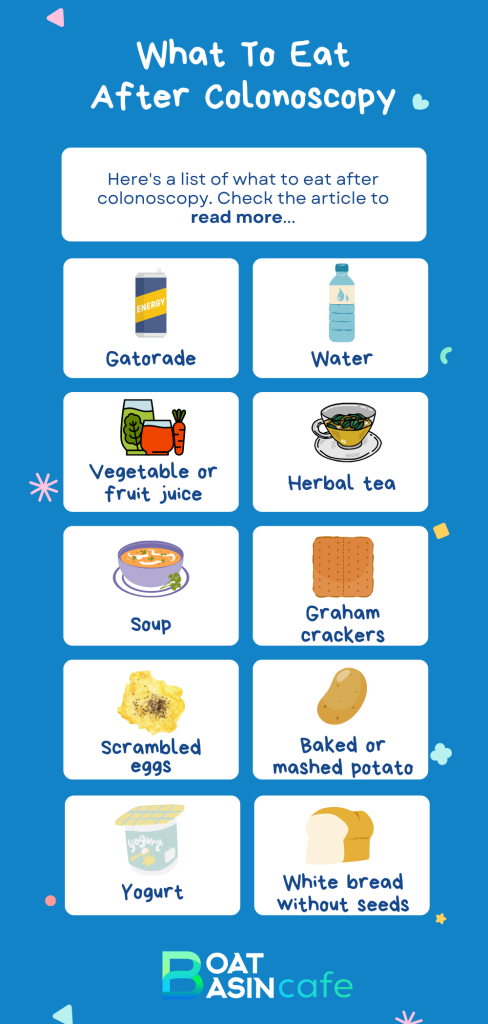
🍴Here’s a list of what to eat after colonoscopy:
- Drinks that contain electrolytes like Gatorade
- Water
- Vegetable juice
- Fruit juice
- Herbal tea
- Soup
- Clear broth
- Graham crackers
- Saltine crackers
- Scrambled eggs
- Tofu (if you’re not allergic to soy)
- Baked or mashed potato
- Soft, cooked vegetables
- Yogurt
- Popsicles
- Jell-O
- Canned peaches and other tender fruit
- Pudding
- Soft white fish
- White bread without seeds
- Smooth nut butter
- Apple butter
🚫What NOT To Eat After Colonoscopy
Here’s what you should NOT eat after colonoscopy.
- Nuts
- Alcoholic drinks
- Fried food
- Steak or any tough meat
- Seeded bread or whole grain bread
- Chunky nut butter
- Seeded or whole grain crackers
- Coconut
- Corn
- Brown rice
- Spicy and seasoned foods
- Raw veggies
- Legumes
- Popcorn
- Raisins and other types of dried fruit
- Unpeeled fresh fruit
🔍 Understanding Colonoscopy: Procedure, Preparation, and Results
🏥 Procedure
During the colonoscopy procedure, the patient is typically sedated or given anesthesia to minimize discomfort. The doctor inserts the colonoscope into the anus and advances it through the rectum and colon. The colonoscope inflates the colon to allow the doctor to view its lining clearly. If the doctor sees any abnormalities, such as polyps or tumors, they may take a tissue sample for further analysis. The procedure usually takes between 30 minutes to an hour, depending on the findings and the patient’s condition.
📋 Preparation
Preparation for colonoscopy is essential for accurate results. The doctor will provide detailed instructions on how to prepare, which typically involves a strict liquid diet for one or two days before the procedure. The patient must also take a laxative solution or pills to empty the colon fully. Before the exam, consult your nurse about anything you should avoid, for example, taking aspirin, to ensure everything goes smoothly. It’s crucial to follow the preparation instructions carefully to ensure the colon is entirely clear for the procedure. Failure to do so may result in a need for a repeat colonoscopy.
📊 Results
After the procedure, the patient will be monitored for a short period until the sedation or anesthesia wears off. The doctor will provide the initial results of the procedure and discuss any abnormalities found. Before leaving the medical facility, make sure to review the report with your healthcare provider to understand your next steps.
If the doctor found any abnormalities, such as polyps, they may recommend specific treatments for your condition. If a tissue sample was taken during the procedure, the results may take several days to weeks, depending on the laboratory processing time.
⚖️ Benefits and Risks
A colonoscopy is a valuable tool for detecting and preventing colon cancer. It is recommended for individuals aged 45 years and older or those with a family history of colon cancer. However, like any medical procedure, colonoscopy has risks, such as bleeding or perforation of the colon. These risks are relatively rare but can occur, particularly in high-risk patients. It’s essential to discuss the benefits and risks of colonoscopy with your doctor before undergoing the procedure.
⚠️ What to Watch for and What to Do
Colonoscopy is a common medical procedure used to diagnose and treat various gastrointestinal conditions. While colonoscopy is generally considered safe, complications can occur during or after the procedure.
🩸 Bleeding
Bleeding is a potential complication of colonoscopy that can occur during or after the procedure. Mild bleeding is relatively common and usually resolves on its own. However, severe bleeding can occur in rare cases and may require treatment, such as blood transfusion or surgery. Symptoms of bleeding may include blood in the stool, dizziness, or weakness. If you experience these symptoms, contact your doctor immediately.
🚫 Perforation
Perforation, or a tear in the colon, is a rare but potentially life-threatening complication of colonoscopy. It can occur during the procedure if the colonoscope punctures the colon’s wall. Symptoms of perforation may include severe abdominal pain, fever, or nausea. If you experience these symptoms, seek medical attention immediately.
💤 Adverse Reaction to Sedation
Sedation or anesthesia is typically used during colonoscopy to minimize discomfort. However, some patients may experience adverse reactions, such as allergic reactions or respiratory problems. Symptoms may include difficulty breathing, wheezing, or swelling of the face or tongue. If you experience these symptoms, notify the medical staff immediately.
🦠 Infection
Infection is a rare but potential complication of colonoscopy. It can occur if the colonoscope or other instruments used during the procedure are not properly sterilized. Symptoms of infection may include fever, chills, redness, or swelling at the procedure site. If you experience these symptoms, contact your doctor immediately.
🥤 Bowel Preparation Complications
Bowel preparation is essential to colonoscopy, and complications can occur if the instructions are not followed correctly. These complications may include dehydration, electrolyte imbalances, or nausea and vomiting. Symptoms may include dry mouth, dizziness, or abdominal pain. If you experience these symptoms, contact your doctor immediately.
FAQs: Common Concerns and Solutions
Here, you will find answers to people’s issues about their colonoscopy prep.
When to Contact a Doctor After Drinking Colonoscopy Prep?
Contact your doctor if you experience:
Severe abdominal pain
Vomiting after taking the prep
Extreme weakness or dizziness
No bowel movements after taking prep
Signs of allergic reaction like hives or difficulty breathing
Is It Normal to Vomit During Colonoscopy Prep?
Some vomiting is normal during a colonoscopy prep; however, avoiding it altogether is a better option.
Can I Mix My Colonoscopy Prep with Sprite?
Adding clear juice or soda will make the prep easier to drink and keep down.
What If I Vomit after Taking Suprep?
Give yourself a break and take the prep in two doses.
Why is Gatorade Good for Colonoscopy Prep?
Gatorade contains many electrolytes and makes up for the ones you lose during the prep.
How Long Are You Asleep for a Colonoscopy?
You are generally sedated for an hour during the procedure. A colonoscopy takes 20 to 30 minutes, and it takes you another 30 minutes to wake up in the recovery room.
What Should I Do If I am Still Having Diarrhea Morning of Colonoscopy?
If your colonoscopy prep diarrhea won’t stop, contact your doctor and ask them what to do next in case you need to reschedule the procedure.
When Does Diarrhea Stop During Colonoscopy Prep?
This depends from person to person, but it usually does last for a couple of hours.
Can I Start Colonoscopy Prep Early in the Evening?
You can start your prep earlier if you plan on splitting the prep into two doses.
Conclusion
The process of cleaning out your colon is painful, gross, and drawn out. However, you need to ensure your colon is completely cleaned out so the doctors can see what is happening inside.
Knowing how to drink colonoscopy prep without throwing up can make the whole process easier. Without any extra nausea and puking, you’ll feel much better and more in control.
So if you have a colonoscopy scheduled, stock up on the Gatorade and strap in for a long night─ you’ve got this.