
Wait! Do not put tuna in the fridge before you find out how long does tuna last in the fridge? Read this post to know the truth.
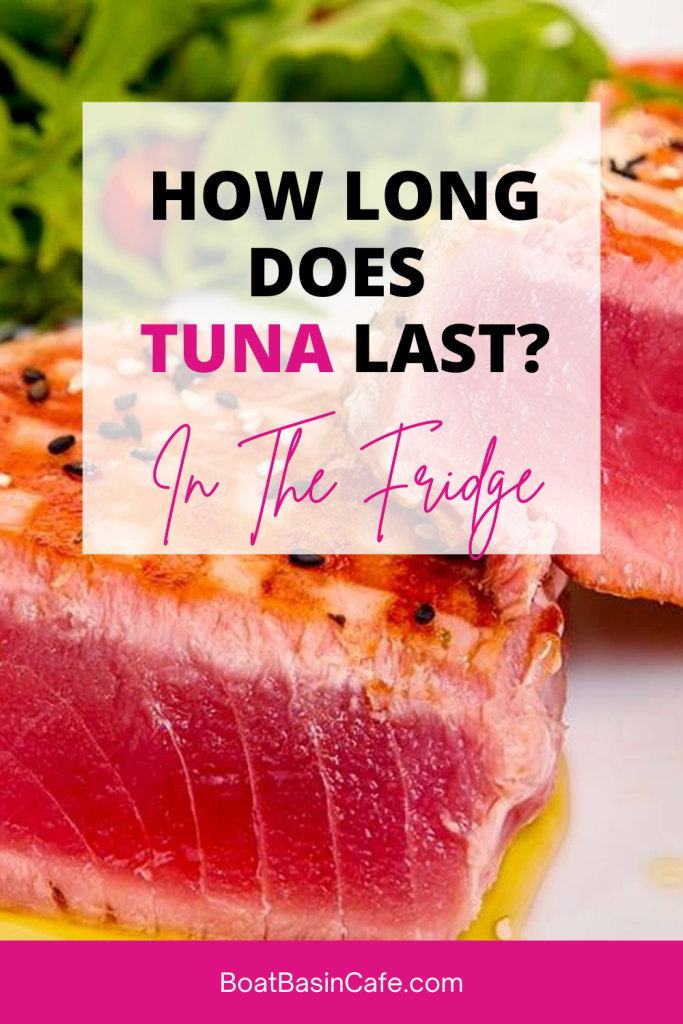
According to National Fisheries Institute, Americans consume 1 billion pounds of tuna each year. I also contribute to the annual consumption of tuna albeit in a smaller quantity. However, at times I go overboard and buy some extra tuna.
Tuna is delicious (no doubt about that) but perishable. That is why before adding it to your cart, you should find out how long does tuna last in the fridge. I will answer this question and share the methods to help it stay fresh.
How long does tuna last in the fridge?
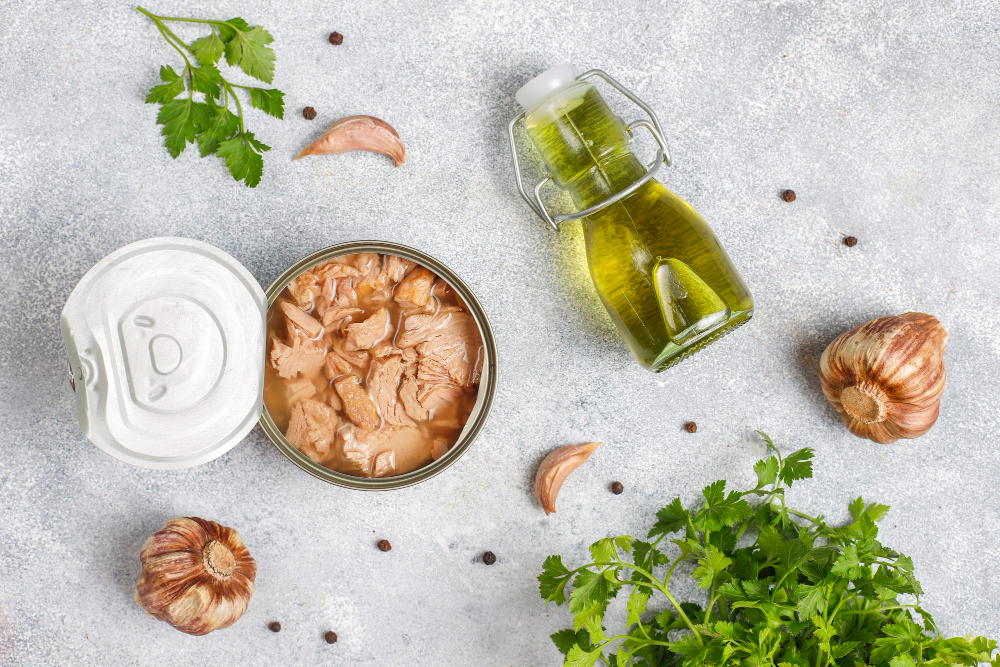
Tuna can last in the fridge from one day up to three years.
Confused?
That is because tuna can be in the form of raw (fresh) tuna, leftover, or canned tuna. I will go into the details of all these variants below.
01. Raw tuna
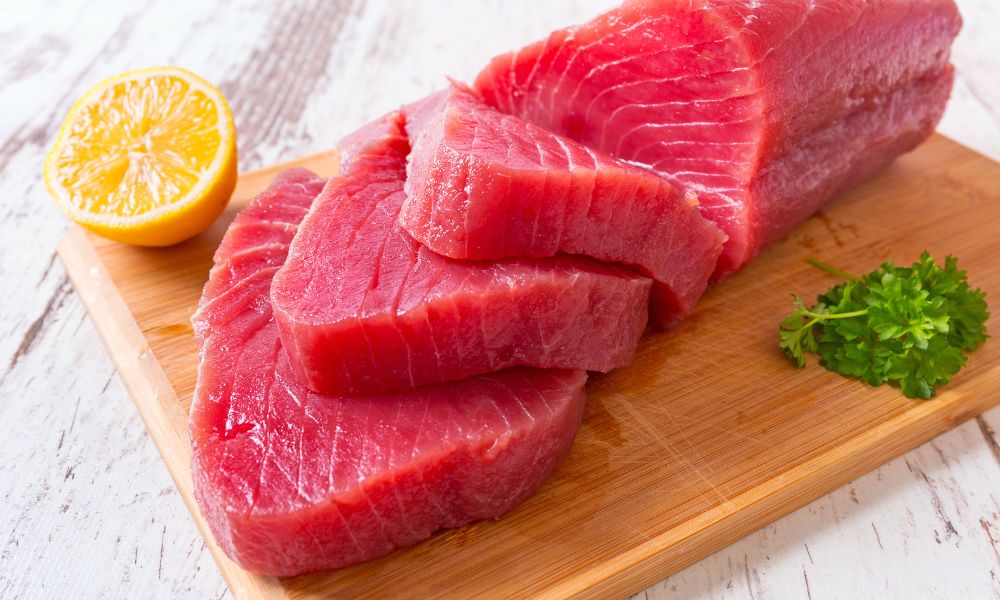
Raw tuna in the fridge can last 1 to 2 days if stored properly. The best-by date of raw tuna is usually the same. Now that you are aware of how long does fresh tuna last in the fridge, it is also important to know that while storing fresh fish, always create a bed of ice on which you place the bag or the container.
02. Leftover tuna
Leftover tuna, for example, leftover tuna salad, can last for 3 to 5 days in the refrigerator provided you store it below 40°F.
The shelf life also varies according to the cooked tuna type you’re dealing with.
| Tuna Type (Cooked) | Shelf life in fridge |
| Skipjack tuna | Up to 4 days |
| Albacore tuna | Up to 3 days |
| Yellowfish tuna | Up to 4 days |
| Bigeye tuna | Up to 4 days |
| Bluefin tuna | 2-3 days |
While I already spoke about the shelf life of tuna salad, let us now look at the shelf life of other popular tuna recipes.
| Tuna recipes | Shelf life in fridge |
| Tuna salad sandwich (with mayo) | Up to 3 days |
| Tuna steak | Up to 3 days |
| Tuna patties | Up to 2 days |
| Tuna tomato curry | Up to 2 days |
| Tuna pasta | Up to 4 days |
| Tuna with rice | Up to 4 days |
03. Canned tuna
Canned tuna is the most popular form of tuna among Americans because of it’s long shelf life. That is why the question, how long does canned tuna last in the fridge is a common one.
Depending on its current state (opened or unopened), the shelf life of tuna in the fridge can vary.
- Opened
The contents of opened cans last in the fridge for 3 to 5 days. Use an airtight container to store them for 3 to 5 days rather than the can.
- Unopened
Usually, unopened tuna can have a shelf life of 2 to 3 years, depending on the exact manufacturing process and the preservatives used. To store the can, either use a referigerator or if that’s not possible, store the can in a cool, dry and dark place.
Guidelines to store tuna in the fridge

While storing tuna in the fridge make sure that you follow a few guidelines.
1. Store in single layers
To prevent bacterial growth in tuna, you must bring its temperature down below 40°F (4°C) as soon as possible. This will expose the entire surface area of tuna to the cold air, thereby rapidly cooling it. This can only happen when tuna is stored correctly in single layers.
The single layers storage mechanism will work when you want to safely store and freeze tuna salad rather than raw tuna.
2. Seal it
Even a properly stored batch of tuna can go bad if there is no proper sealing mechanism. Rather than using any older container, get airtight containers like this 77L Food Storage Container. Such a container has an airtight seal and a large surface area, making it easy to chill tuna rapidly. Alternatively, you can use a tightly sealed glass container or heavy-duty freezer bags.
3. Ensure correct temperature
Whether you want to store opened canned tuna, homemade tuna salad, or fresh fish, set the refrigerator temperature below 40°F.
According to US FDA, bacteria grow rapidly between temperatures of 40°F to 140°F. Once you cool tuna down below 40°F, bacterial growth will slow down and not go bad.
What is the shelf life of tuna at room temperature?
Prepared or cooked tuna has a short shelf life of two hours at room temperature. Even rapidly cooling it after that time will hardly eliminate the bacteria that have already grown, so it is not fit to eat anymore. In case you have kept it at room temperature for longer, it is best to discard it.
Additional factors that affect tuna shelf life in the fridge

When storing tuna in the fridge not all factors are under your control. Some of the additional factors which impact the shelf life include:
- Other ingredients
If the tuna recipe you are storing in the fridge contains other perishable ingredients like mayo, their shelf life will also impact the shelf life of tuna. Tuna fish with mayo can remain good for 3 to 4 days. Tuna with any type of pasta is good only for only 4 days. Tuna with egg can last for 5 days.
- Container rigidity
Whether you use a plastic or glass container, if it is not rigid enough, it will not be airtight, resulting in varying temperatures. Thus, even the best quality tuna will get spoilt when stored in such a container.
Can you freeze tuna?
You can freeze fresh tuna, canned tuna, tuna salad sandwich, or even leftover canned tuna by putting it into a ziptop bag. The good news is that frozen tuna can remain good for up to 3 months unless and until it has spent longer than two hours at room temperature.
The procedure to freeze tuna is relatively simple.
Step 1- Divide tuna into small portions using ziptop bags and seal the bag while squeezing out the air.
Step 2- Label the bags with the freezing date and place them in the freezer.
Step 3- Rapidly freeze the bags.
How to know if tuna has gone bad?
Now that you are aware of how long tuna can stay in the fridge, it is essential to know how to detect if tuna has gone bad. That is what I will cover below.
01. Change of color
Any change of color indicates that tuna has gone bad. If you notice dark brown, black, or even green streaks on tuna when you extract it from the fridge or freezer, it indicates that it is gone bad. Dark brown or black streaks indicate excessive bacterial growth, whereas mold appears in green streaks.
02. Acrid smell
An acrid or unpleasant odor indicates that tuna has gone bad. The good news is, the smell will be distinct whenever you take a whiff on opening the container, freezer bag, or can. Thus, it won’t take too long to detect whether the tuna has a foul smell.
03. Leaking container
The container or the can of tuna leaking indicates a problem preserving tuna. It might consist of excessive bacteria, which can result in food poisoning as well. Even if you do not notice any other signs I have highlighted, it is best to discard tuna.
04. Explosive sound
To be clear, I’m not saying that the can will explode when you pull it out from the fridge and open it. However, a pop sound could be heard when you open the can.
Such a sound indicates that something has not gone right during the refrigeration.
A bulge in the can during refrigeration can result in such a sound on opening the can.
Even if you do not detect any other signs of tuna going bad, it is best to discard the contents of such a can.
5. Visible corrosion
Any corrosion on opened or unopened cans will make the tuna unfit for consumption. That is because corrosion results in microscopic holes which let air inside. It means that the conditions inside the can will change. Also, corrosion can seep into the preservatives inside the can, especially the liquid ones like olive oil (often used in canned tuna), thereby contaminating the entire can. This problem is common in older cans.
Therefore, it is best to discard the tuna altogether even if you cannot view any damage to the can but only notice corrosion.
The correct way to reheat tuna stored in the fridge
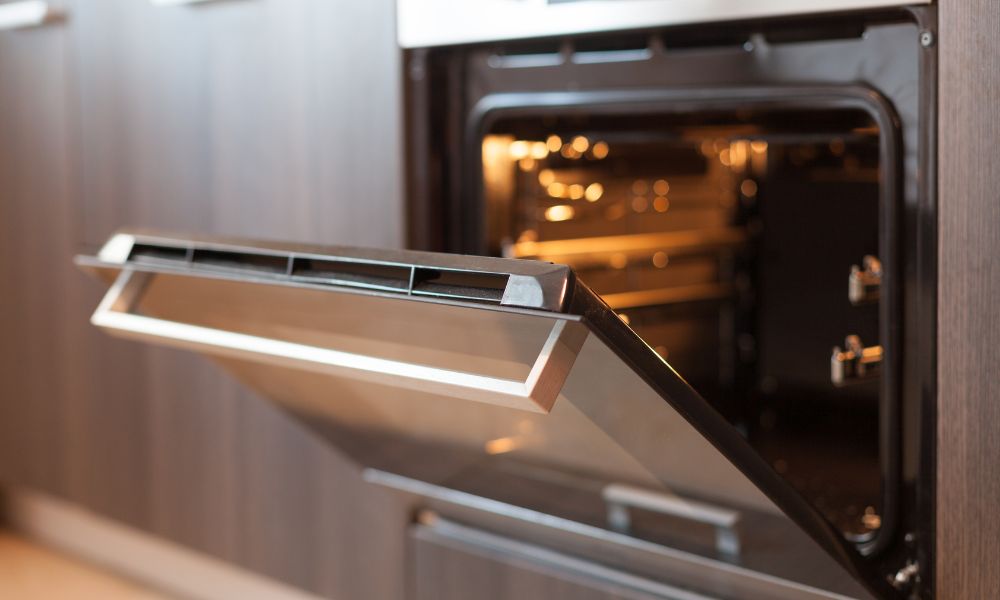
While using different heat sources to reheat refrigerated tuna, an oven is your best option.
Step 1- Firstly, preheat the oven to a temperature of 275°F.
Step 2- Splash some water on a baking sheet and spread the tuna (extract it from bag/can) on it without overlapping. Above it, place aluminum foil.
Step 3- Place the baking sheet in the oven and heat it for 10 minutes. Heat the tuna to 150°F, and it will be safe for consumption.
Whether you’re dealing with canned or leftover tuna, this method works great.
Way to maximize the shelf life of tuna in the fridge
How about extending the shelf life of raw tuna in the fridge up to 2 weeks?
The procedure that I will highlight below will exactly help you do that.
The method works with raw Skipjack tuna, Albacore tuna, yellowfin tuna, bigeye tuna, and bluefin tuna.
Things you need
- One lb of tuna (any type)
- 1.5 cups of olive oil
- One clove crushed garlic
- Three sprigs thyme or alternative aromatics like bay leaf, rosemary, or red pepper
Step 1- Cook tuna in a pan
Rinse tuna with clean water and pat it to remove excess water. After that, cut it into a couple of portions to fit snugly into the saucepan. Add olive oil to the saucepan (1.5 cups) and put the saucepan on low heat until it starts simmering.
Step 2- Add garlic
Once it simmers, turn off the stove top knob and add herbs like garlic and other aromatics. Usually, simmering will take up to 10 minutes. You need to cook tuna until then.
Step 3- Shift to a glass jar and let it cool
Once you have added the herbs, you have two move the contents of the saucepan into a jar and let them cool down on the countertop. Once they have cooled down, cover the jar and place it in the refrigerator.
In the refrigerator, it can last for up to 2 weeks.
Conclusion
Thus, tuna can last in the fridge from one day to even three years, depending on the tuna type. In case of any doubts, simply follow my guide above, and you shouldn’t have a problem knowing when refrigerated tuna is fit for consumption and when you should discard it.
Following the guide above is the time to stock up on tuna for easy consumption whenever you want.
FAQs
Is tuna good after 4 days in the fridge?
Yes, tuna is fit for consumption even after four days in the fridge. The only exception to this is raw tuna, in which case it is good for only 1 to 2 days.
Can you eat tuna after five days?
Yes, you can eat tuna after five days only if you have kept it in the fridge. However, if you’re speaking about raw fish, you can consume it only within two days. In case you have stored raw tuna fish for more than that, it will get spoilt, and you need to discard it.
How long does tuna casserole last in the refrigerator?
Tuna casserole can last for two days in the refrigerator. The condition, however, is that it should be airtight. If it is not airtight, it will hardly last for a day.
A much better option is to either transfer the contents into a freezer bag or an airtight container, in which case it can last for up to 5 days. If you want the tuna casserole contents to last for a longer time, freeze them instead.
Can you freeze canned tuna to extend its shelf life?
Unopened canned tuna can be transferred to a freezer bag or an airtight container for freezing. In that case, it will last for up to 3 months. If the can is closed, and you haven’t opened it, you can directly place it in the freezer, and it will be good till the best-by date.
What is the highest temperature allowed for refrigerating tuna salad?
The highest temperature allowed for refrigerating tuna salad is 39°F. At 39°F or below, tuna salad in the fridge can last 3 to 5 days. Anything beyond that will help the bacteria multiply, and thereby soon enough, the tuna salad will be inedible.
Can canned tuna go bad in heat?
Yes, canned tuna can undoubtedly go bad in the heat. Even if tuna’s unopened can is exposed to direct sunlight or direct heat for around two hours, the bacteria growth will be so high that tuna will be inedible. If you’re speaking about opened canned tuna directly exposed to heat and sunlight, it can spoil in less than 90 minutes.